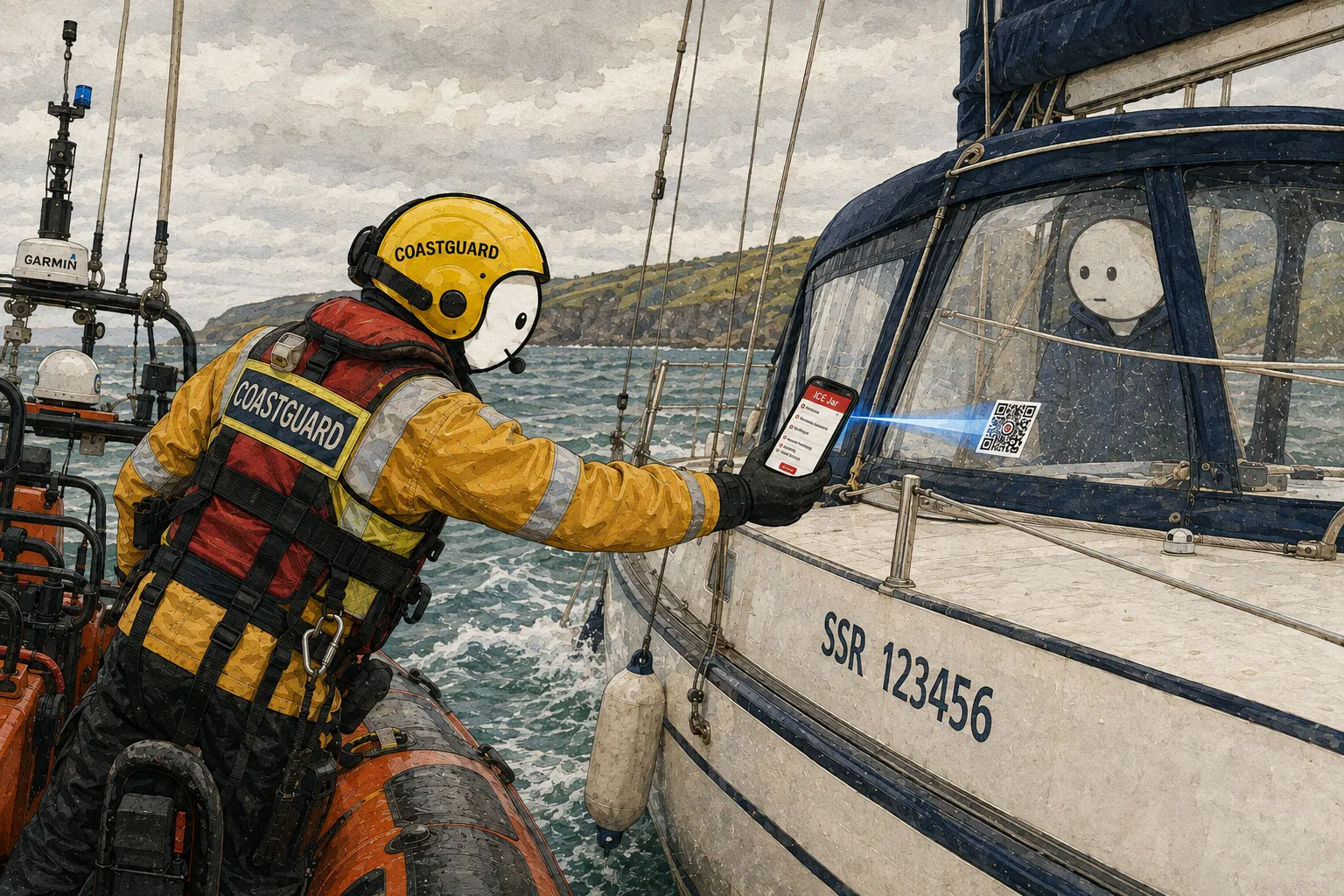
A Mayday with no vessel details
A distress call gives an MRCC controller a location and a rough headcount, but nothing about who’s aboard, their medical history, or what the crew being launched needs to know before they get there. Checking a Small Ships Register entry or MMSI takes time nobody has mid-rescue — a QR code on the hull or windscreen gives them everything in one scan.
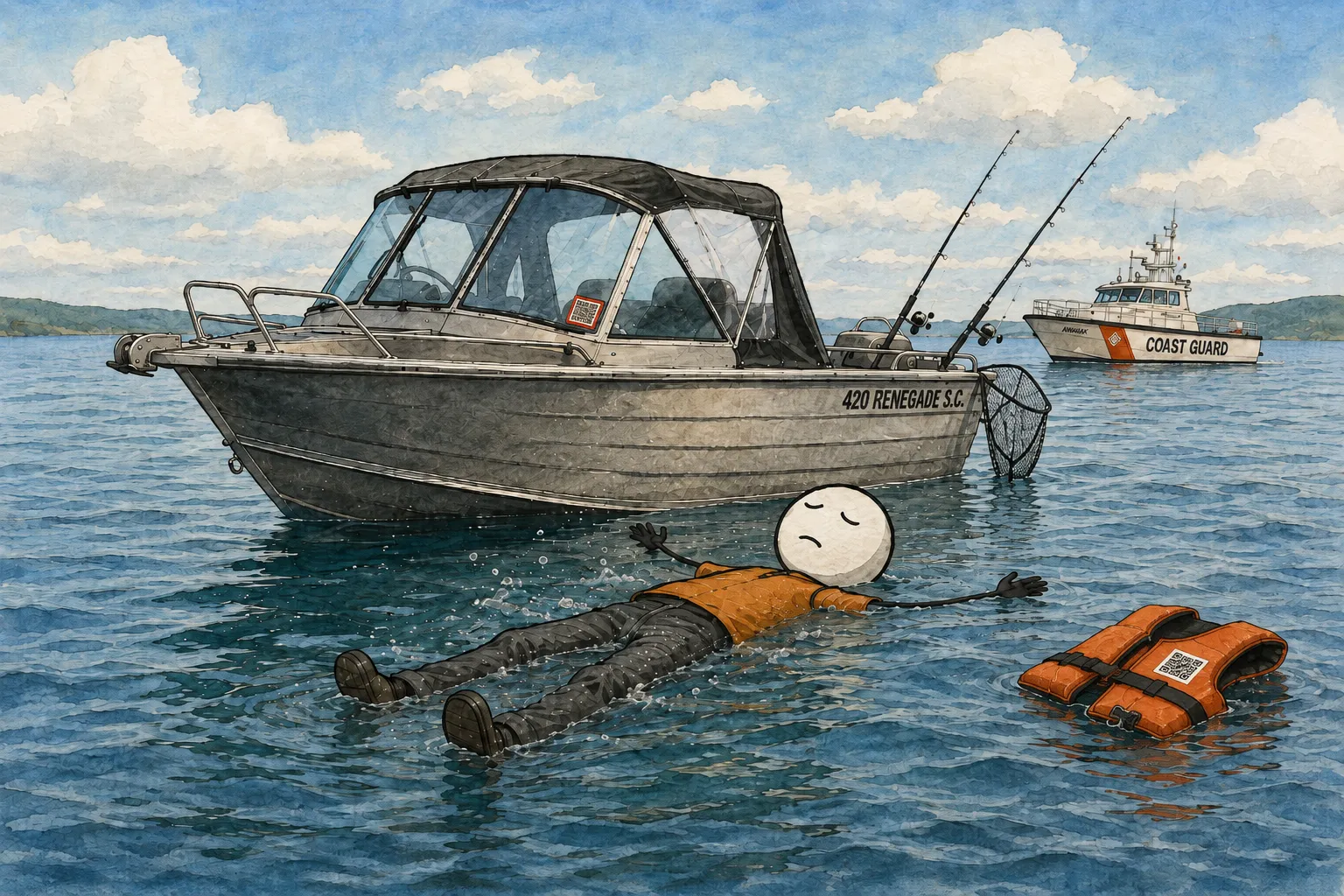
Recovered from the water, unable to speak for themselves
A casualty pulled from the sea near their own boat, cold and unresponsive, with no ID on them and a coastline of possible starting points. The only lead is whatever’s on the vessel itself — a QR code on the windscreen turns that into a full ICE record in seconds.
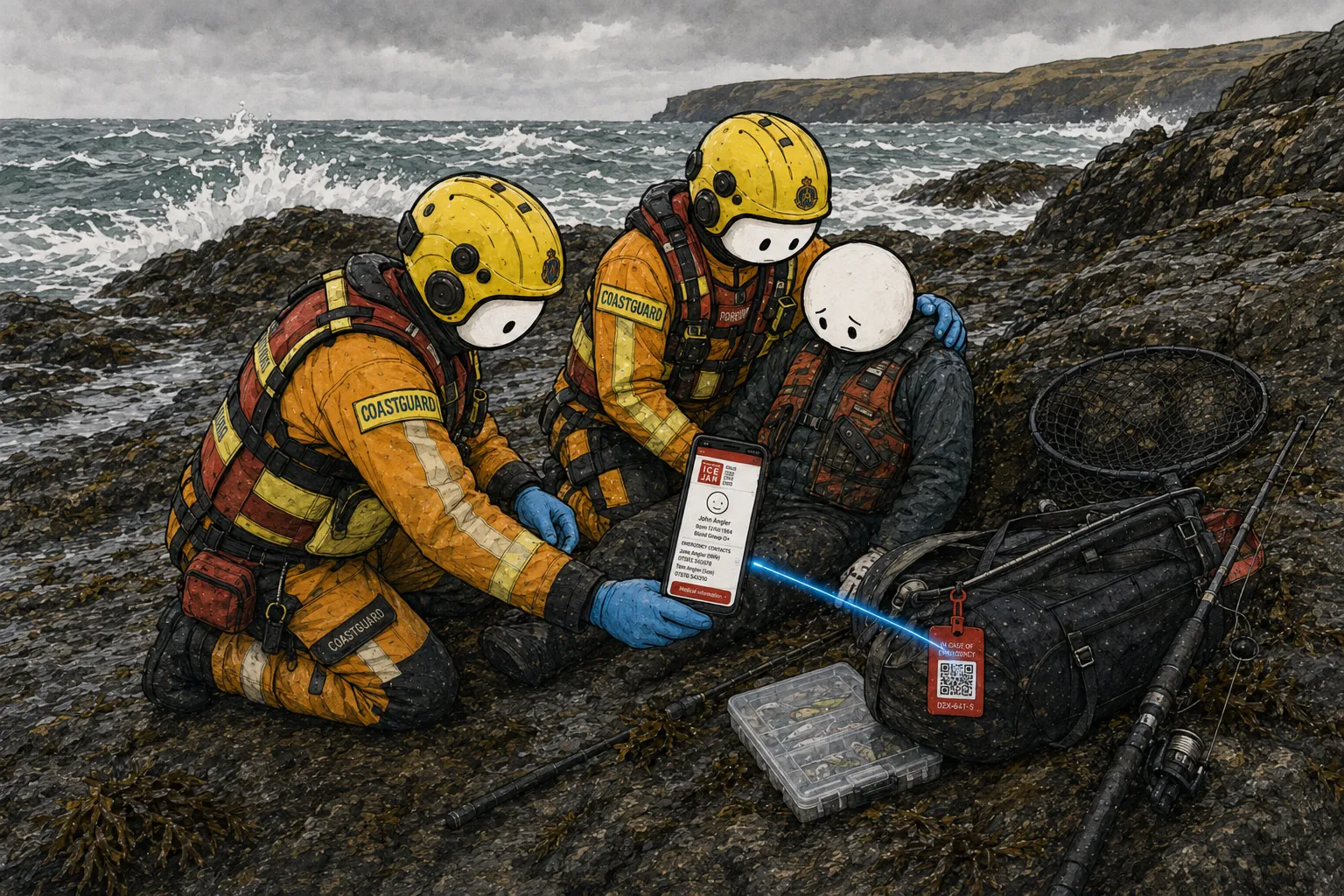
Cut off by the tide, swept from the rocks
Rock and shore anglers are a recurring feature of Coastguard call-outs — swept in by a wave or a rising tide they didn’t see coming. Whoever reaches them first has no medical history and no next of kin, just a QR tag on their kit bag or life jacket.
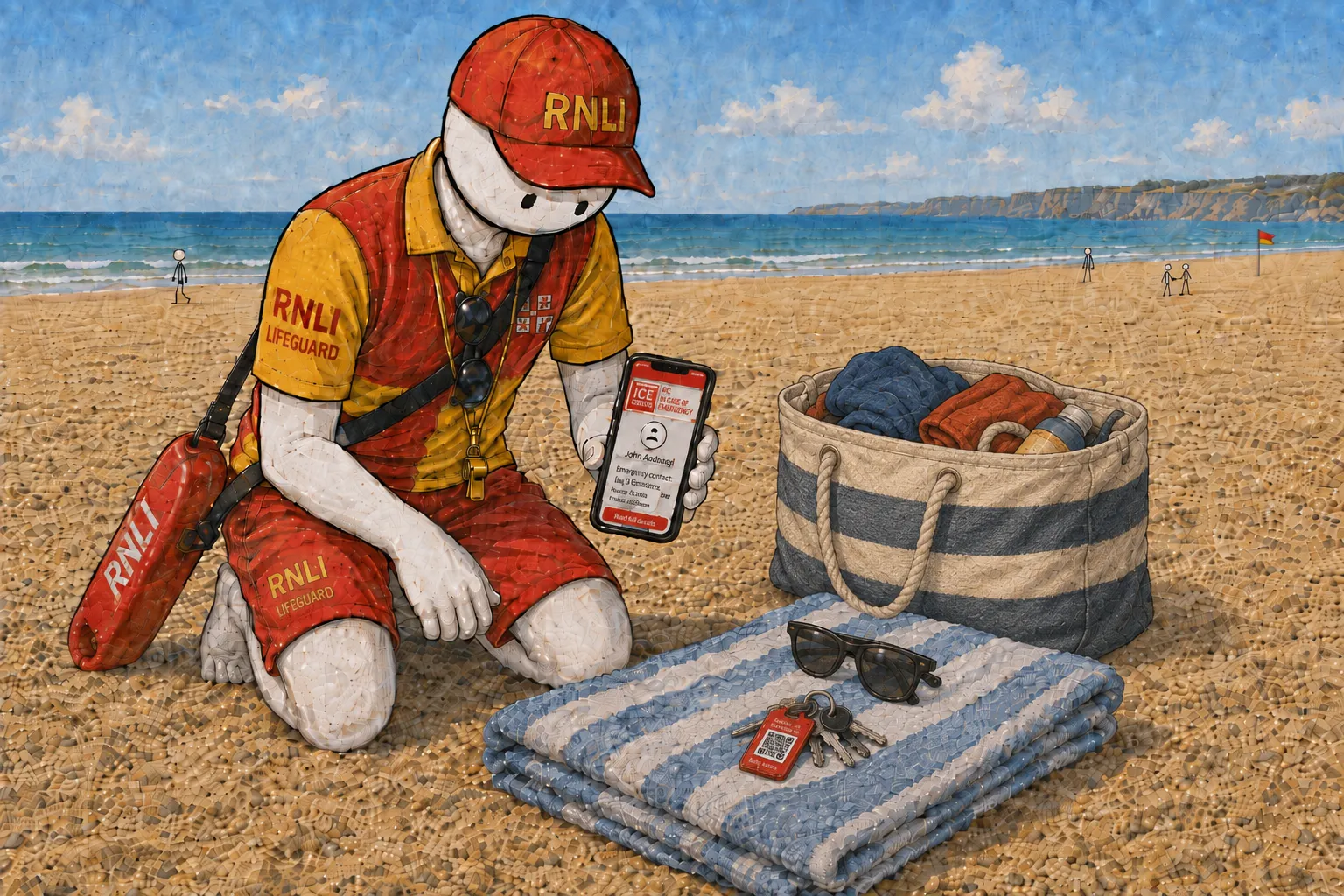
A missing swimmer, only their belongings on the beach
A folded towel, a phone, and a beach bag are often all that’s left to go on when a swimmer doesn’t come back in — and every minute spent working out who they are is a minute not spent searching the water. A QR code on the bag gives lifeguards and the Coastguard a name and a starting point immediately.
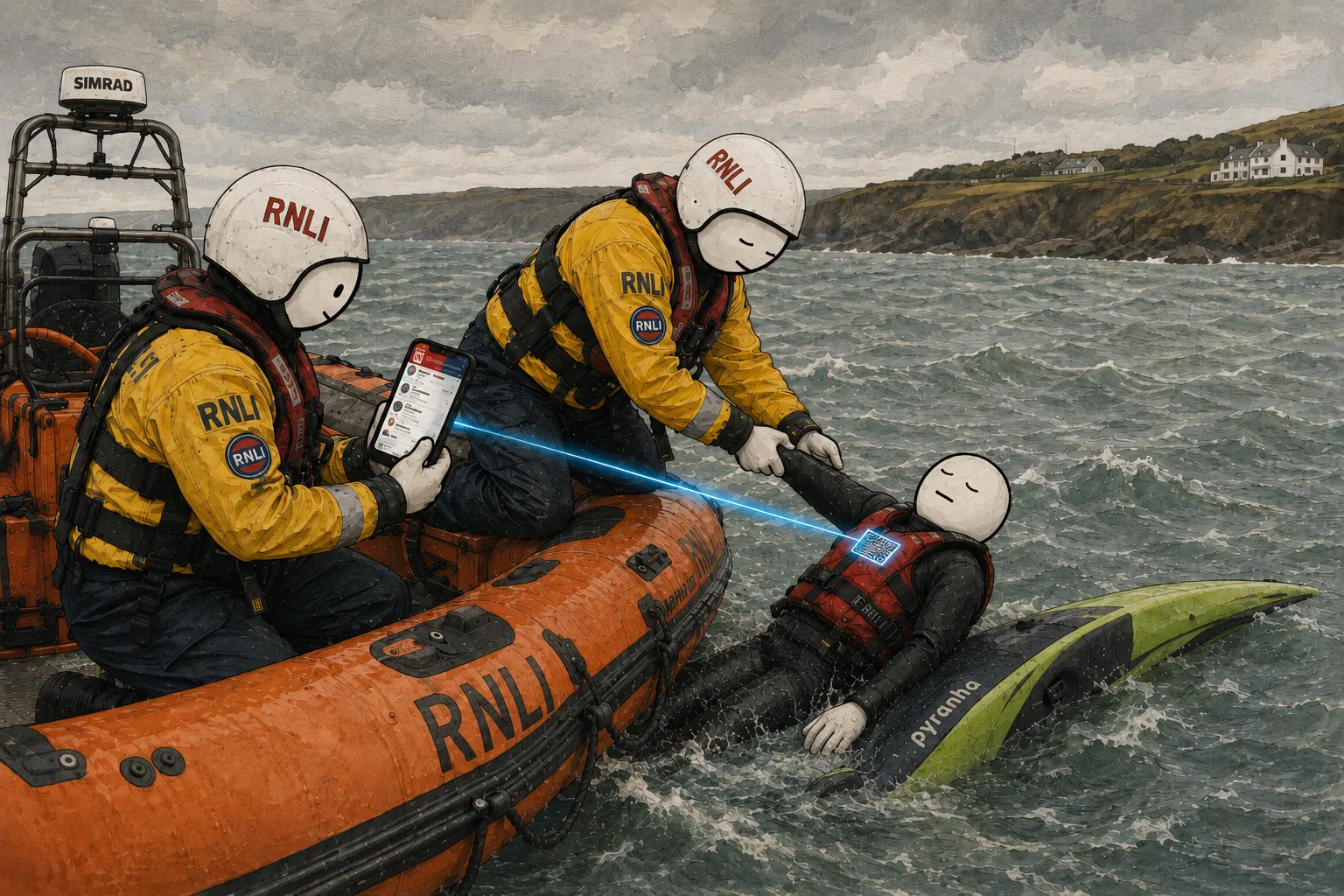
Thrown from a boat, kayak or jet ski, racing cold water shock
Capsized from a dinghy, separated from a paddleboard, or thrown clear of a jet ski — nearly 950 lifeboat launches a year are for people in the water, racing the minute or so before cold water shock takes hold. A crew pulling them aboard needs to know who they’re treating immediately, not after.
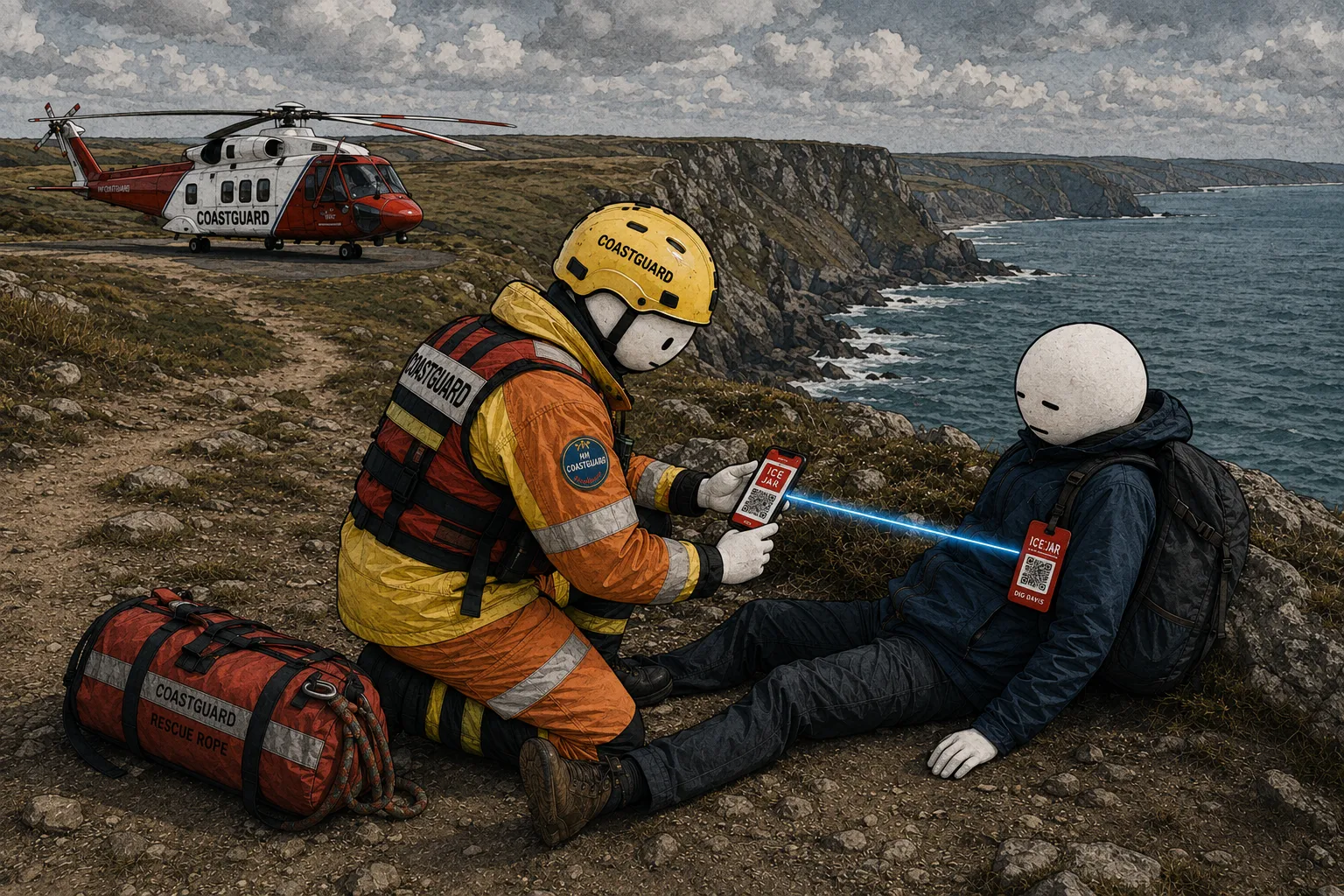
A cliff, coastal path or missing-person search
A fall from a coastal path, a cliff-edge injury, or a police request to help search the shoreline for someone missing — Coastguard Rescue Teams and volunteer officers start with almost nothing but a description and a last-known location. A registered ICE Jar means anything found — a bag, a phone, a wristband — confirms an identity in the field, not hours later.